Child Safeguarding & Protection
Safeguarding is everyone's responsibility. Learn to recognise concerns, respond well, and report them — the welfare of the child is always paramount.
Why Safeguarding Matters
AISA is committed to a safe, inclusive and respectful environment for every student. Safeguarding is not a single role — it is a shared responsibility held by every member of staff.
The guiding principle
The welfare of the child is paramount. It is a principle of UAE law and child-protection procedure that the protection and welfare of students must always come first.
📜 The frameworks we follow
🧭 Our guiding principles
- • Equal protection for all students.
- • Students should feel safe physically, emotionally and digitally.
- • All concerns are taken seriously, acted on promptly, and kept confidential.
- • We work in partnership with families, authorities and agencies.
Safeguarding at AISA is reviewed annually by the Governing Board and the Safeguarding Committee.
Watch: The Safeguarding Briefing
Video not loading? Make sure you're signed in with your AISA Google account, then open it directly in Google Drive.
Key Definitions
Safeguarding
The proactive steps we take to prevent harm before it happens.
Child Protection
The specific actions we take when harm is suspected or confirmed.
⚠️ The four types of abuse
🧩 ALN — Additional Learning Needs
Support a student may need beyond typical classroom instruction. Safeguarding and inclusion work hand in hand.
Roles & Responsibilities
Designated Safeguarding Lead (DSL)
Oversees safeguarding, trains staff, and maintains records. Every concern is reported to the DSL.
Safeguarding Committee
Counsellor, Nurse, Head of Inclusion, Health & Safety Officer, and Divisional Leaders.
👥 All staff & volunteers — that means you
- ✓ Complete annual safeguarding training.
- ✓ Report concerns immediately to the DSL.
- ✓ Follow the Code of Conduct and confidentiality at all times.
- ✓ Avoid private one-to-one interactions with students behind closed doors.
Your Responsibility
A student tells you something during a lesson that makes you worried about their safety at home. What is your responsibility?
Reporting & Whistleblowing
⏱️ The 24-hour rule
Report suspected abuse within 24 hours. All reporting goes to the DSL / Principal for your division.
🛡️ You are protected
- • Whistleblowers are legally protected in the UAE.
- • To stay anonymous, a reporter must explicitly request it.
⚖️ It is a legal duty
Under UAE law, a mandated reporter who fails to report is subject to fines and possible legal action. When in doubt, report.
📞 External child-protection contacts
Emergency
999
MOI Child Protection Hotline
+971 2 333 3903
Online
www.moi-cpc.gov.ae
childprotection@moi.cpc.gov.ae
🔒 Strict confidentiality
AISA employees are strictly prohibited from discussing active or closed cases with any third party — including other employees and the media.
Responding to a Disclosure — the 5 R's
If a student discloses something to you, follow these five steps.
Receive
Listen carefully, without judgment.
Reassure
Affirm that speaking up was right. Don't make promises you can't keep.
React
Don't investigate. Ask only open-ended questions if you need to.
Record
Write the child's exact words, date, time and location — right after, not in front of the child.
Report
Notify the DSL and file the report internally with them.
✅ Do
- • Listen empathetically and non-judgmentally.
- • Observe the student; let them know they are believed.
- • Let them know who they can trust.
- • Work closely with the counsellor / admin.
🚫 Don't
- • Ask probing or leading questions.
- • Try to counsel the student yourself.
- • Tell people who don't need to know.
- • Assume it isn't true and fail to report.
🤐 On confidentiality with students
Never guarantee absolute confidentiality. It's better to say you might have to tell someone whose job is to keep them safe. Don't keep anything illegal, damaging or threatening covered up — and don't engage students who come to complain about other staff; pass it to the DSL.
Receiving a Disclosure
A student starts to disclose something serious and asks, "Promise you won't tell anyone?" Which response best follows the 5 R's?
Types of Abuse & Risk Factors
It is everyone's responsibility to protect students' wellbeing — and at times, you are the first responder. Harm can include threats from those responsible for a child's care: family members, guardians, or other adults in the student's life.
Physical
Emotional
Sexual / Exploitation
Neglect
📈 Risk factors to be alert to
🔎 Harm isn't always visible
Adverse Childhood Experiences (ACE) research shows that children from affluent families can suffer hidden harm in less visible ways (Felitti et al., 1998). Stay alert across every community, and consider each situation through a thoughtful cultural lens.
Self-Harm & Suicide
It's okay to not be okay. Your calm, prompt response can save a life.
Self-harm is when someone hurts themselves to cope with very difficult feelings, painful memories or overwhelming situations. It can be a way to make invisible pain visible, to feel in control, or to express suicidal feelings without acting on them. Approach it without judgement.
👀 Possible signs of self-harm
- • Heavy scratching in one area; unexplained cuts or bruising
- • Cuts/scratches to arms, thighs or torso (easily hidden)
- • Bruising to knuckles or forehead
- • Oddly placed or repeated burn marks
- • Multiple plasters/coverings over one area
⚠️ Suicide warning signs
- • Talking, writing, texting or drawing about wanting to die
- • Planning (notes, researching methods)
- • Harming self; expressing hopelessness
- • Severe emotional pain or distress
- • Marked behaviour changes — withdrawal, sleep changes, anger, agitation
Responding to self-harm
- 1. Remain calm.
- 2. Listen with empathy — no judgement, don't question their reasons.
- 3. Inform the assigned counsellor.
🆘 If you believe a student may be suicidal
- 1. Maintain direct physical supervision of the student.
- 2. Immediately contact the Safeguarding Lead.
Do NOT wait until class is over or the end of the day.
Digital Safety, Records & AI
📹 Security & digital safety
- • CCTV in all classrooms and main campus areas.
- • Visitor ID, sign-in and badge requirements.
- • No sharing of student data on personal devices or unapproved platforms.
🗄️ Confidentiality & record keeping
- • Secure digital storage, separate from academic files.
- • Access only by the DSL and one identified additional safeguarding member.
- • Staff must not keep personal copies of reports.
🤖 Essential guidelines for AI usage
Your Safeguarding Team & Counsellors
Elementary Safeguarding Team
- Alia Nejdawi — Assistant Principal, Safeguarding Lead (DSL)
- Counsellors: Laylin Chong · Sara AlBeainy
- Nurses: Dinesh Muragan · Kaviya Sasikumar
- anejdawi@aisa.sch.ae
Secondary Safeguarding Team
- Savvas Largatzis — MS Assistant Principal, Safeguarding Lead (DSL)
- Counsellors: Naiema Zaki (HS) · Jenn Guss (HS) · Joel Hunter (MS)
- Nurses: Jothi Vinod · Kaviya Sasikumar
- slargatzis@aisa.sch.ae
🧑🏫 When to refer a student to a counsellor
Email the counsellor with your referral. Counsellors provide short-term support, crisis response and risk assessments — they do not counsel staff or issue consequences for students. Anything safeguarding-related still goes to the DSL.
A Student in Crisis
Mid-lesson, a student hands you a note suggesting they are thinking about ending their life. What do you do?
Complete Your Mandatory Acknowledgment
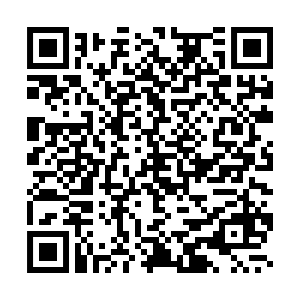
As a mandatory requirement, complete the safeguarding acknowledgment form to confirm you've finished this training. Scan the QR code or use the button below.
📝 Open the acknowledgment formRemember the essentials: safeguarding is everyone's responsibility · report to the DSL within 24 hours · never promise secrecy · the welfare of the child is paramount.